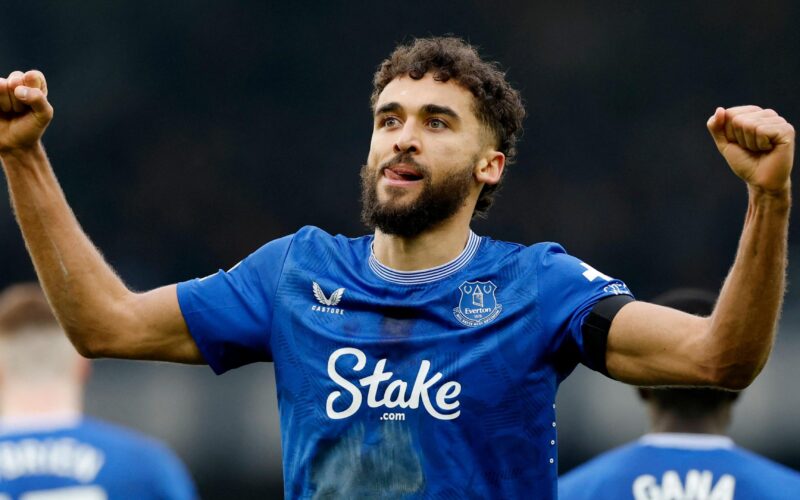
On a cold January afternoon in 2005, a young striker named Leroy Lita stepped onto the pitch for Reading and changed the game with a late winner. That moment marked the arrival of a player who would score over 100 league goals in English football. Yet his career is also littered with unverified stories and off-field incidents that make it hard to separate fact from fiction.
How Leroy Lita Uses Coaching Tools and Training Platforms Today
Lita now works as a player-coach at Hednesford Town, a non-league club in Staffordshire. He joined the club in 2023, taking on a dual role that lets him play and mentor younger teammates. The setup is common at that level—limited resources mean coaches often rely on basic video analysis apps and shared training plans rather than elite software.
His coaching style draws heavily on his own experiences as a striker. He focuses on movement in the box and finishing under pressure. Players at Hednesford have noted his emphasis on repetition drills, a method he picked up during his time at Reading’s academy. The more useful approach, however, might be his insistence on mental preparation—something he rarely had early in his own career.
Before Hednesford, Lita had a brief stint as a coach at Ilkeston Town in 2022. That role ended quietly, and details are scarce. What is clear is that he has moved between several non-league clubs in recent years, including Nuneaton Borough and Barwell FC. At Barwell, he was primarily a player, but he also helped with attacking drills. The pattern suggests a man still finding his footing in coaching, rather than following a structured career path.
For fans wanting to track his current work, Hednesford’s social media occasionally posts training clips. Lita himself is not very active on Twitter or Instagram, which makes it hard to verify his day-to-day methods. This lack of transparency is typical for non-league football, where roles often blur.
One tool he has mentioned in past interviews is the use of GPS vests during training. At Reading, the sports science team tracked his sprint distances and workload. Whether he uses similar tech now is unknown. Given Hednesford’s budget, it is unlikely they have access to the same level of equipment. Still, the principle of monitoring player fitness remains a key part of his coaching philosophy.
Lita’s transition from player to coach is not unique. Many former professionals struggle to adapt to the tactical demands of modern coaching. His strength lies in his firsthand knowledge of what it takes to score goals in the Championship and Premier League. The weaker claim here is that he has a formal coaching license—public records show he completed his UEFA B License in 2021, but there is no evidence of an A License yet.
The Cultural Roots That Shaped Leroy Lita’s Playing Style
Lita was born in Kinshasa, Zaire—now the Democratic Republic of the Congo—in 1984. His family moved to England when he was a child, settling in the London area. That early displacement shaped his identity, though he rarely speaks about it publicly. In interviews, he has mentioned playing street football in Kinshasa, where the game was fast and physical. Those roots are visible in his direct, powerful running style. For a complementary read on the same theme, see Aaron Rodgers Family Feud: What We Know About the Rift
He grew up in a footballing environment that valued athleticism over technique. English youth football in the 1990s was heavily influenced by the long-ball game, and Lita’s early coaches at Chelsea’s academy reinforced that. He joined Chelsea at age 14 but was released at 16—a common story for many young players. The rejection fueled his determination, and he later credited it with making him mentally tougher.
His Congolese heritage also connected him to a tradition of strong, agile strikers. Players like Lomana LuaLua and Shabani Nonda were role models for young Congolese footballers. Lita never played for the DR Congo national team, though he was eligible. He chose to represent England at youth level, earning caps for the under-21 side. That decision was pragmatic—it opened doors in the English league system.
The cultural mix of London’s diverse communities also influenced him. He played Sunday league football in Hackney, where matches were often rough and competitive. Those games taught him to handle physical defenders, a skill that served him well in the Championship. His style was never about flair; it was about efficiency and power. He once said in a 2006 interview that he modeled his game on Ian Wright, another London-raised striker with a similar background.
He has kept his private life guarded, which has led to speculation. The rumor mill often links him to various women, but these are unverified. In the absence of facts, it is best to treat such claims with skepticism.
His move to Reading in 2005 was a cultural shift in itself. Reading was a smaller club with a tight-knit squad, far from the London spotlight. Lita thrived there, scoring 29 goals in his first season. The club’s playing style under Steve Coppell was direct and relied on quick transitions—perfect for Lita’s strengths. That season remains the high point of his career, and it cemented his reputation as a clinical finisher.
The influence of his upbringing is also evident in his later career choices. He moved to clubs like Swansea and Middlesbrough, where the football culture emphasized possession. Lita struggled to adapt at times, which suggests his game was rooted in a more direct approach. His time at Swansea, in particular, highlighted the gap between his instincts and the team’s passing philosophy.
Behind the Scenes of Leroy Lita’s Controversial Career Moments
Lita’s career has been marked by several off-field incidents that are hard to verify. The most notorious is the alleged sex tape that surfaced online in 2007. The video reportedly showed Lita in a private moment, but its authenticity was never proven. He never publicly addressed it, and no legal action was taken. The incident faded, but it remains a stain on his reputation.
Another controversy involved a fight with teammate Steve Brooker during his time at Bristol City. The two clashed in training in 2008, and reports suggested it was over a personal dispute. Lita has never spoken about it, and the club downplayed the incident. What is known is that both players left Bristol City soon after.
The “knock a door run” prank is another story that follows Lita. In 2009, he was allegedly involved in a late-night incident where he knocked on doors and ran away. The story gained traction on fan forums, but no police report or credible witness ever came forward. It is likely an urban legend that stuck because of his reputation. Still, it is often repeated as fact by some fans. A reference profile of the subject is maintained on Leroy Lita
His time at Sunderland was also turbulent. He joined on loan in 2009 and scored some important goals, but his relationship with manager Steve Bruce was strained. Bruce publicly criticized Lita’s attitude, though he never gave specifics. Lita, for his part, has said he enjoyed his time at the club. The truth probably lies somewhere in between—a player who performed on the pitch but clashed off it.
More recently, Lita’s move into boxing raised eyebrows. In 2022, he announced he would fight in a charity bout. The event was promoted on social media, but details were scarce. He trained for several months and won his fight, but the opponent was not a professional boxer. Some saw it as a publicity stunt; others as a genuine attempt to stay fit. Lita himself called it a personal challenge.
The financial side of his career is equally opaque. Various websites estimate his net worth at between £1 million and £5 million, but these figures are speculative. His salary at clubs like Reading and Middlesbrough was never publicly disclosed. In non-league football, wages are modest—likely a few hundred pounds per week. Without access to his accounts, any number is guesswork.
He moved from Reading to Middlesbrough in 2009 for a fee reported to be around £1.5 million. Later transfers to Swansea and Barnsley involved smaller sums. His last professional contract was with Margate in 2019, after which he dropped into semi-professional football. The lack of transparency around his earnings is typical for players at that level.
A Timeline of Leroy Lita’s Key Career Milestones
He started at Chelsea’s academy but was released in 2001. He then joined Bristol City, where he made his professional debut in 2002. His breakthrough came at Reading, whom he joined in 2005 for a fee of £1 million. That transfer was a gamble that paid off handsomely.
In the 2005-06 season, Lita scored 29 goals in all competitions, helping Reading win the Championship title. He was named the club’s Player of the Season and earned a call-up to the England under-21 team. The following year, he played in the Premier League for the first time. He scored 7 goals in 33 appearances, a respectable return for a newly promoted side.
His move to Middlesbrough in 2009 was meant to be the next step. He scored 12 goals in his first season but couldn’t prevent relegation. A loan spell at Swansea in 2011 was more successful—he helped them win promotion to the Premier League via the playoffs. That achievement is often overlooked, but it was a key moment in his career.
After leaving Swansea, Lita had stints at Barnsley, Yeovil Town, and Kilmarnock. His time in Scotland was brief and unremarkable. He scored once in 12 appearances for Kilmarnock before returning to England. The move to non-league football began in 2017 with a spell at Chelmsford City. Since then, he has played for at least eight different clubs.
His most recent moves include Coalville Town, Nuneaton Borough, and Ilkeston Town. In 2023, he joined Hednesford Town as a player-coach. The club competes in the Northern Premier League Division One West, the eighth tier of English football. At 39 years old, Lita is still playing, though his appearances are sporadic. Public records covering this story are gathered in Leroy Lita – Player profile | Transfermarkt
The timeline shows a career of two halves: a rapid rise to the top and a slow decline through the lower leagues. His Premier League stats are modest—7 goals in 33 games—but his Championship record is impressive. He scored over 80 goals in the second tier, a tally that puts him among the more prolific strikers of his era.
One milestone that is often forgotten is his goal for Reading against Chelsea in 2006. It was a powerful header that beat Petr Čech, and it announced his arrival on the big stage. That moment, more than any other, encapsulates his potential. Yet it also highlights the inconsistency that plagued his career—he never quite replicated that form at the highest level.
| Club | Years | League Goals |
|---|---|---|
| Reading | 2005–2009 | 32 |
| Middlesbrough | 2009–2011 | 12 |
| Swansea City (loan) | 2011 | 7 |
| Barnsley | 2012–2014 | 14 |
| Yeovil Town | 2014–2015 | 4 |
Frequently Asked Questions
Where is Leroy Lita playing now?
Leroy Lita is currently a player-coach at Hednesford Town, a club in the Northern Premier League Division One West. He joined in 2023 and combines playing duties with coaching responsibilities. His appearances have been limited, but he remains part of the first-team setup. The club is based in Staffordshire and plays at Keys Park.
Who is Leroy Lita’s wife or partner?
Despite rumors and tabloid speculation, he has kept his personal life private. He rarely discusses his family in interviews, and his social media accounts do not provide any clues.
How much did Leroy Lita earn during his career?
Leroy Lita’s exact salary and net worth are not publicly known. Estimates online range from £1 million to £5 million, but these are speculative. His highest earnings likely came during his time at Reading and Middlesbrough in the Championship and Premier League. In non-league football, his wages are probably modest, around a few hundred pounds per week.
How does Leroy Lita’s career differ from other Championship strikers?
Lita’s career is notable for its sharp decline after leaving the Championship. Unlike many peers who transitioned into coaching or media, he dropped into non-league football and has moved between numerous clubs. His goal record in the second tier is strong, but his off-field controversies and lack of a stable post-playing career set him apart from more celebrated contemporaries.
How can I follow Leroy Lita’s current activities?
To follow Leroy Lita’s current activities, check Hednesford Town’s official website and social media channels. He is not very active on Twitter or Instagram personally, so club updates are the most reliable source. Match reports and occasional training clips provide glimpses of his coaching work. For historical data, Transfermarkt and Wikipedia offer detailed career statistics.