
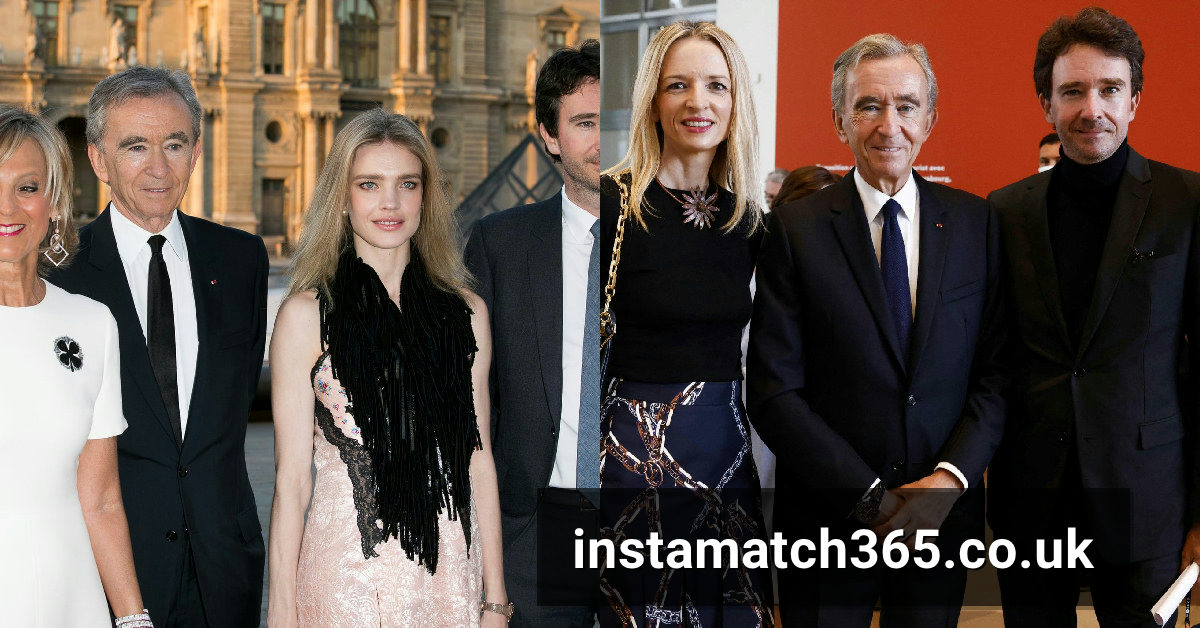
Who actually controls the world’s largest luxury empire right now? Bernard Arnault does, through a web of family holdings and a relentless focus on brand prestige. His net worth sits around $200 billion in early 2025, though that number swings with every earnings report from LVMH.
You might wonder why a 76-year-old French billionaire still dominates headlines. The answer involves a slowing Chinese economy, five ambitious children, and a $16.2 billion bet on Tiffany & Co. that reshaped the jewelry industry. This article cuts through the noise to give you the facts, the trade-offs, and the questions nobody asks aloud.
Where Bernard Arnault Stands Now and What Comes Next
LVMH’s market cap reached roughly $400 billion in 2025. That’s a staggering figure, but it masks a real problem: luxury demand in China has cooled sharply. You’ve probably seen the headlines about young Chinese shoppers pulling back. For Arnault, this isn’t a distant trend—it’s a direct hit to revenue.
His response has been characteristically blunt. Instead of discounting, LVMH doubled down on exclusivity. Louis Vuitton raised prices again in 2024. Dior opened a sprawling new flagship on Avenue Montaigne. The logic is simple: when volume dips, you squeeze more from each sale. It’s a high-risk strategy that assumes the ultra-wealthy won’t flinch.
Meanwhile, the family chessboard is shifting. In 2023, his daughter Delphine Arnault became CEO of Christian Dior. His son Antoine now runs the family holding company, Agache. Four other children hold key roles across the group. You’re watching a carefully orchestrated succession unfold in real time—but it’s not without tension.
The weaker claim here is that Arnault will simply hand over the reins and retire. He shows no sign of stepping back. In fact, LVMH recently raised the CEO age limit to 80, ensuring he can stay at the helm. For you, the takeaway is clear: this is still very much his show.
| Key Figure | Role in 2025 |
|---|---|
| Bernard Arnault | Chairman & CEO, LVMH |
| Delphine Arnault | CEO, Christian Dior |
| Antoine Arnault | CEO, Agache (family holding) |
| Alexandre Arnault | Executive VP, Tiffany & Co. |
| Frédéric Arnault | CEO, LVMH Watches |
| Jean Arnault | Director, Louis Vuitton Watches |
What comes next? Expect more acquisitions. Arnault has never been shy about buying brands in a downturn. With luxury valuations softening, 2025 could bring another blockbuster deal. You should watch the jewelry and spirits sectors closely—they’re ripe for consolidation.
What Is Confirmed and What Remains Unverified About Bernard Arnault’s Empire
Let’s separate fact from speculation. That’s public record. He owns a vast art collection, including works by Picasso, Basquiat, and Mondrian. The 2019 Tiffany acquisition closed at $16.2 billion—the largest luxury deal ever.
But here’s the catch. That wealth is almost entirely tied to LVMH stock. A 10% drop in the share price can erase $20 billion overnight. You’re not looking at cash in a vault; you’re looking at a volatile paper fortune.
Now the unverified. Rumors swirl about internal family rivalries. Some sources claim his children jockey for position, but no credible report confirms a feud. The succession plan remains opaque. Arnault has said all five children are capable, yet he hasn’t named a single successor. That ambiguity is deliberate—it keeps everyone hungry.
Another gray area: the true impact of China’s slowdown. LVMH doesn’t break out country-level profits. You see revenue dips in Asia ex-Japan, but the exact hit to margins is guesswork. Analysts project a 5-8% decline in Chinese luxury spending, but those are estimates, not hard data.
What about the art collection? Its value is unverified. Insurers and art advisors speculate it’s worth over $1 billion, but no public appraisal exists. The same goes for his real estate holdings—a private island in the Bahamas, a château in Bordeaux, a Parisian mansion. You won’t find a neat balance sheet.
The more useful approach is to focus on what’s disclosed. Everything else—the succession drama, the art valuation, the family tensions—is noise until proven otherwise. Stick to the filings if you want the truth.
How Bernard Arnault Compares to Other Luxury Titans and Tech Billionaires
Arnault isn’t the only billionaire playing the luxury game. François Pinault, founder of Kering, is his closest rival. Kering owns Gucci, Saint Laurent, and Bottega Veneta. But the gap is wide: Kering’s market cap is roughly $60 billion, a fraction of LVMH’s $400 billion. You’re comparing a speedboat to an aircraft carrier.
Pinault took a different path. He started in timber, not fashion. His son, François-Henri Pinault, now runs Kering and has pushed sustainability harder than LVMH. Yet Gucci’s recent struggles show how fragile a single-brand bet can be. Arnault’s portfolio approach—owning dozens of brands across categories—offers more stability.
Then there’s the tech crowd. Elon Musk and Jeff Bezos trade the top spot with Arnault on wealth rankings. Their fortunes also hinge on stock prices. But here’s the difference: tech wealth is built on disruption and scale. Luxury wealth is built on scarcity and heritage. You can’t code a Birkin bag.
Musk’s net worth can swing $30 billion in a day based on Tesla tweets. Arnault’s moves more slowly, tied to quarterly earnings and Chinese GDP. For you, the lesson is about volatility. Tech billions are a rollercoaster. Luxury billions are a slow-moving glacier—until they’re not.
Consider the succession angle. Musk has young children and no clear corporate heir. Bezos stepped back from Amazon but remains executive chair. Arnault, by contrast, has embedded his five children deep in the business. It’s a dynastic model that echoes old European family firms, not Silicon Valley startups.
The weaker comparison is to someone like Amancio Ortega, founder of Inditex (Zara). Ortega also built a fashion fortune, but his model is fast fashion, not luxury. Margins are thinner, volumes higher. Arnault would never chase that game. He’s selling exclusivity, not accessibility. You pay for the logo, not just the garment.
One more contrast: art collecting. Arnault’s Louis Vuitton Foundation in Paris is a public showcase. Musk and Bezos don’t have comparable cultural footprints. That matters for brand perception. When you buy a Dior bag, you’re buying into a world that includes Basquiat and Gehry architecture. It’s a halo effect that tech money can’t easily replicate.
What the Tiffany Acquisition Teaches About Bernard Arnault’s Playbook
The Tiffany deal almost fell apart. In 2020, LVMH tried to back out, citing the pandemic. Tiffany sued. Arnault renegotiated, shaving $425 million off the price. You can learn a lot from that move. He never overpays if he can help it. For a broader factual overview, Bernard Arnault lays out the key context
Once the deal closed, he moved fast. He installed his son Alexandre as executive VP. He replaced the CEO and creative team. He pushed Tiffany into higher-margin categories like gold jewelry and high-end watches. The old Tiffany—affordable silver, heart tags—was sidelined. You’re now seeing a brand repositioned for the ultra-rich.
The results? Mixed. Revenue grew initially, but the China slowdown hit hard. Tiffany’s reliance on tourist spending in flagship stores became a liability. Yet the brand’s cachet has undeniably risen. A revamped New York flagship reopened in 2023 to long lines. The lesson: Arnault plays a long game, even when short-term pain is acute.
For you, the takeaway is about patience and control. He doesn’t buy brands to leave them alone. He buys them to reshape them. That means job cuts, creative overhauls, and pricing hikes. If you’re an investor, you cheer. If you’re a traditionalist, you cringe. There’s no middle ground.
Another lesson: family involvement is non-negotiable. Alexandre’s role at Tiffany isn’t ceremonial. He’s learning the ropes under pressure. Arnault uses acquisitions as training grounds for his children. It’s a high-stakes apprenticeship program with billions on the line.
The weaker claim is that every acquisition succeeds. Some LVMH brands, like Marc Jacobs, have stumbled. But the overall portfolio is so diversified that a single failure barely registers. That’s the luxury of scale. You can afford a few duds when Louis Vuitton and Dior keep printing cash.
Finally, note the timing. Arnault bought Tiffany when luxury was booming. He held firm during the pandemic dispute. He’s now navigating a downturn. The full verdict on this deal won’t be clear for another five years. But if history is any guide, he’ll come out ahead. He usually does.
Frequently Asked Questions
What is a good alternative to investing in LVMH stock directly?
You could consider a luxury-focused ETF like the Amundi S&P Global Luxury ETF, which spreads risk across multiple companies including Kering, Hermès, and Richemont. This avoids single-stock exposure to Arnault’s decisions while still capturing sector growth. However, LVMH’s sheer size means it often dominates such funds anyway.
How does Bernard Arnault’s succession plan differ from other family-run luxury empires?
Unlike Hermès, which has a clear family CEO succession line, Arnault keeps all five children in top roles without naming an heir. This creates internal competition but also uncertainty. Chanel, by contrast, is privately held by the Wertheimer brothers with a non-family CEO. Arnault’s model is uniquely opaque and centralized.
Who is Delphine Arnault and why does her role matter?
Delphine Arnault is Bernard Arnault’s eldest daughter and CEO of Christian Dior since 2023. She previously spent a decade at Louis Vuitton. Her promotion signals that Dior is a top priority and that she is a leading succession candidate. She also sits on LVMH’s board, giving her influence across the group.
Is it ethical to buy from LVMH brands given their environmental impact?
LVMH publishes sustainability reports and has set carbon-reduction targets, but luxury production inherently uses significant resources. Leather goods, exotic skins, and global shipping carry a heavy footprint. You must weigh the brand’s stated commitments against the industry’s structural impact. Independent audits are limited, so full transparency remains elusive.
How much does a share of LVMH cost and is it worth it for small investors?
As of early 2025, one LVMH share trades around €700–€800 on the Euronext Paris exchange. Fractional shares are available through some brokers. The stock pays a modest dividend (around 1.5% yield) but the real return comes from long-term price appreciation. It’s a concentrated bet on global luxury spending.
