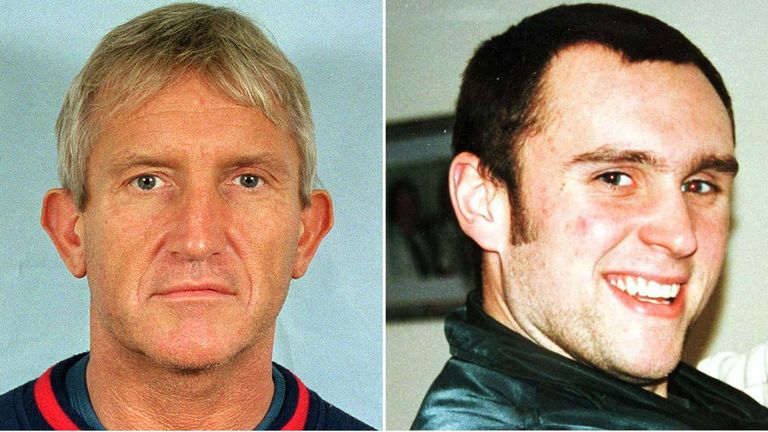
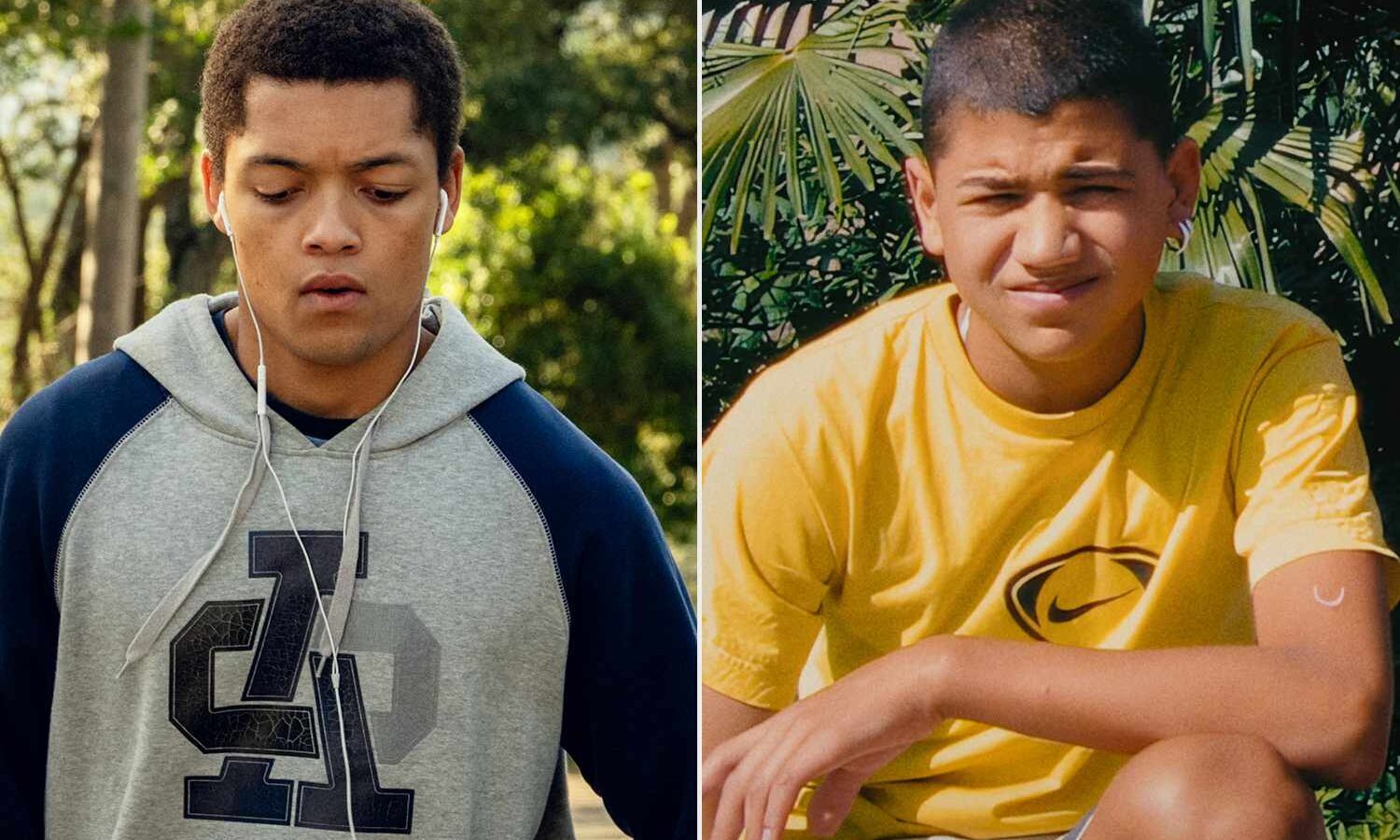
Alex Hanscombe is the son of Rachel Nickell, the young mother murdered on Wimbledon Common in July 1992. He was two years old at the time and was the only witness to the attack. His life since then has been shaped by that single morning, by his father André’s decision to raise him away from England, and by his own choice to speak publicly decades later.
In 2016 he published a memoir, Letting Go, which detailed his childhood, his relationship with his father, and his attempt to understand what happened. The book was written with the journalist Fiona Barton and drew attention partly because Alex had never before given a full account of his memories. He has since appeared in documentaries and interviews, but he has also kept much of his adult life private.
What the Public Often Gets Wrong About Alex Hanscombe’s Story
One common misconception is that Alex Hanscombe remembers the murder in vivid detail. He has said in interviews that he does not have a clear, continuous memory of the attack. What he retains are fragments: sensory impressions, a sense of fear, and the aftermath. In Letting Go he describes these fragments carefully, without claiming they form a reliable narrative. The weaker claim here is that a two-year-old could provide courtroom-quality testimony decades later. Alex himself has rejected that idea.
Another misconception concerns his father, André Hanscombe. Some coverage implies André fled England to hide Alex from the world. The reality is more practical. André moved with Alex first to France, then to Barcelona, and later to other parts of Spain. He wanted his son to grow up without being defined solely by the murder. That decision was not about secrecy; it was about giving Alex a childhood that was not dominated by press attention.
A third error is the assumption that Alex has spent his life in therapy or as a recluse. He has worked, travelled, and built relationships. He has also spoken about the long-term effects of trauma, but he does not present himself as permanently broken. The more useful approach is to see him as someone who has had to manage a public identity he never asked for. For a complementary read on the same theme, see André Hanscombe: Life After Tragedy and the Questions That Still Follow Him
| Fact | Detail |
|---|---|
| Born | 1989 or 1990, in England |
| Mother | Rachel Nickell, killed July 1992 |
| Father | André Hanscombe |
| Memoir | Letting Go, published 2016 |
| Current residence | Spain, according to recent reports |
Some sources describe Alex as having a Spanish accent because he grew up partly in Barcelona. What is clear is that he is bilingual and has spent most of his life outside the United Kingdom. His nationality is British, though his upbringing was continental European.
How Spain and Barcelona Shaped His Upbringing and Public Reception
André Hanscombe chose Barcelona as a place where he and Alex could live without constant recognition. The city offered anonymity, a different language, and distance from the British tabloid press. Alex has said that growing up in Spain gave him a sense of normalcy that would have been impossible in London. That regional context matters because it explains why so little was known about him for two decades.
In Spain, Alex attended local schools and learned Catalan and Spanish. He was not raised as a public figure. His father worked in various jobs, and the family lived modestly. The decision to stay in Spain was reinforced by the fact that the Rachel Nickell case remained unresolved for years. The initial investigation focused on Colin Stagg, who was acquitted in 1994. Robert Napper was eventually convicted of the manslaughter of Rachel Nickell in 2008 on the grounds of diminished responsibility. By then Alex was already an adult.
Public reception of Alex in the UK has been sympathetic but also intrusive. When Letting Go was published, some reviewers praised his honesty while others questioned whether the book was exploitative. Alex addressed that criticism directly. He said the memoir was his attempt to take control of a story that had been told by others for too long. That is a reasonable position, though the commercial nature of true crime publishing means the line between agency and pressure is not always clear.
His accent, his manner, and his occasional appearances in Spanish media have led to speculation about his identity. Some online discussions ask whether Alex Hanscombe is Muslim or what his religion is. There is no public evidence that he follows any particular faith. He has not spoken about religion in interviews, and any claim about his beliefs is unverified. The same applies to questions about his ethnicity. He is of white British background, but he has not made his ethnic identity a topic of public discussion.
What the Memoir and the Netflix Documentary Reveal About Trauma
Letting Go is not a conventional true crime book. It is a first-person account of growing up after a violent loss. Alex describes how his father protected him, how he learned about the murder in stages, and how he eventually decided to meet the police and journalists. The book’s title refers to his attempt to release the anger and confusion he carried. One specific detail from the memoir is his description of returning to Wimbledon Common as an adult. He walked the same paths and tried to reconstruct what happened, not to solve the crime but to understand his own fear.
The Netflix documentary The Witness, released in 2020, brought Alex back into public view. The film focused on the murder investigation and included interviews with Alex and André. It showed footage of their life in Spain and allowed Alex to speak about his memories in his own words. The documentary did not reveal major new evidence, but it did humanise a case that had often been reduced to headlines. Alex’s participation was significant because he had previously avoided cameras.
One lesson from this case study is that trauma does not follow a single timeline. Alex was a toddler when his mother died, yet the effects appeared at different stages of his life. He has spoken about anxiety, about the weight of being “the boy who survived,” and about the difficulty of forming an identity separate from the crime. Another lesson is that public sympathy can be a burden. People wanted Alex to be a symbol of resilience, but he has resisted that role. He has said he is not a hero and does not want to be treated as one. For a broader factual overview, After The Witness and The Murder of Rachel Nickell, here's a look at what her husband André **Hanscombe** and son **Alex****Hanscombe** are doing now. lays out the key context
We should be careful not to turn Alex into a case study for our own comfort. His story is specific, not a universal template for grief. The memoir and documentary are valuable because they show one person’s attempt to make sense of an event that defies sense. That is enough.
Where Alex Hanscombe Is Now and What Comes Next
As of the most recent public reports, Alex Hanscombe lives in Spain. He has not given a precise location, and he has asked for privacy. Some sources mention Barcelona, while others suggest he has moved to a quieter area. The Tab reported in June 2026 that André and Alex were living in Spain more than three decades after the murder. That report did not include an exact address or current photographs, which is consistent with the family’s long-standing preference for discretion.
He has worked in various roles, but he has not pursued a public career. He is not a full-time writer or media personality. The memoir appears to have been a one-off project rather than the start of a publishing career. He has occasionally given interviews to promote the book or the documentary, but he has not maintained a public social media presence. That absence is deliberate.
Questions about his marital status are common. Is Alex Hanscombe married? He has not announced a marriage, and no credible source has reported one. The same applies to questions about children. Alex has kept his personal relationships out of the press, and that choice should be respected. Any claim about a spouse or family is speculation unless Alex himself confirms it.
What comes next for Alex is unknown. He has said he wants to live a quiet life. He has also said he may speak again if he feels it is useful. The Rachel Nickell case is closed in legal terms, but the public interest has not disappeared. Alex’s challenge is to manage that interest without letting it define him. He has done so for more than thirty years, and there is no reason to think that will change.
Frequently Asked Questions
What is Alex Hanscombe best known for?
He is best known as the son of Rachel Nickell, who was murdered on Wimbledon Common in 1992. Alex was two years old and present during the attack. He later wrote a memoir, Letting Go, and appeared in the Netflix documentary The Witness. His public identity is tied to that crime, though he has tried to build a life beyond it.
How much does Alex Hanscombe earn from his memoir or media appearances?
There is no public information about his earnings. Letting Go was published in 2016, but sales figures and royalties have not been disclosed. Alex has not spoken about money in interviews. Any estimate of his income would be speculation. He appears to live modestly and has not pursued a high-profile media career.
Is it ethical to keep asking about Alex Hanscombe’s private life?
That is a fair question. Alex was a victim of a violent crime, not a perpetrator. He has repeatedly asked for privacy. While public interest in the case is understandable, pressing for details about his marriage, religion, or exact location crosses a line. The ethical approach is to respect what he has chosen to share and not to treat his trauma as entertainment.
Who is André Hanscombe in relation to Alex?
André Hanscombe is Alex’s father. He was Rachel Nickell’s partner at the time of her death. After the murder, André took Alex to France and then to Spain to escape media attention. He raised Alex largely on his own and has also given interviews about the case. André’s role is central to Alex’s story because he made the decision to leave England.
When did Alex Hanscombe publish his memoir?
Letting Go was published in 2016. Alex was in his mid-twenties at the time. The book was co-written with journalist Fiona Barton. It was his first major public statement about the murder and his childhood. The publication came more than two decades after the crime and followed years of silence from the family.