
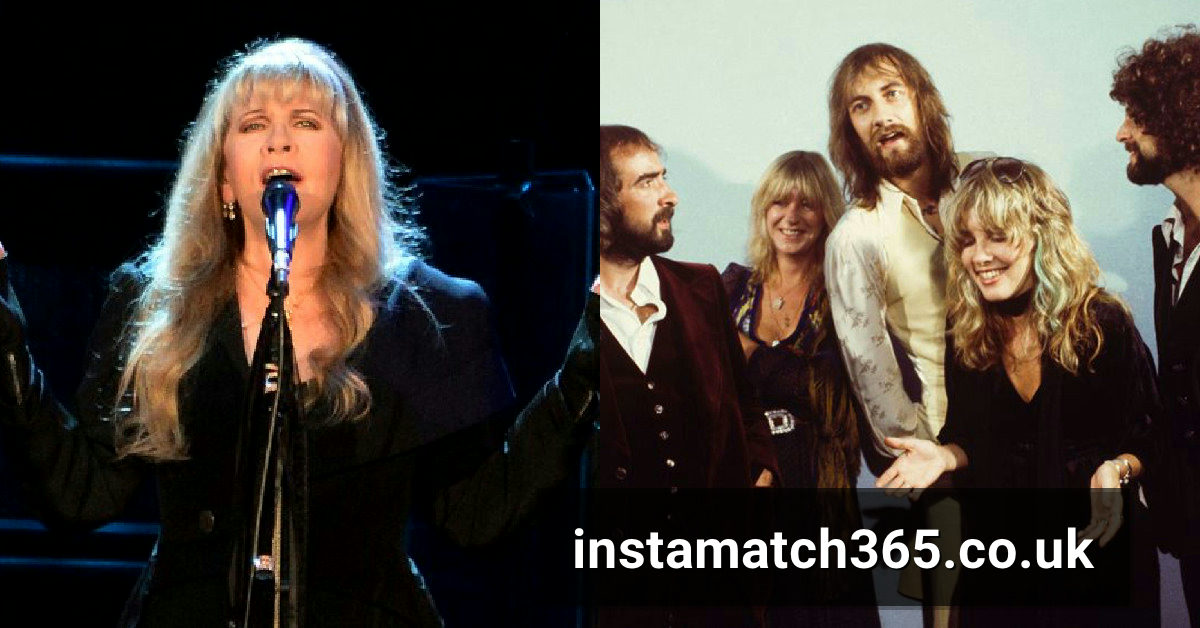
Many people assume Fleetwood Mac has one permanent lead singer. That assumption is wrong. The band has cycled through multiple lead vocalists since its 1967 founding, with no single person holding the title permanently. Stevie Nicks is the most famous voice, but she shared the spotlight with Lindsey Buckingham and Christine McVie for decades. Even earlier, Peter Green and others fronted the group. The real story is more fluid than most fans realize.
Fleetwood Mac began as a British blues band in London. Guitarist Peter Green named the group after drummer Mick Fleetwood and bassist John McVie. Green was the original frontman, singing and playing lead guitar on early hits like “Black Magic Woman.” His departure in 1970 triggered a series of lineup changes that eventually led to the classic 1975 roster. That year, Stevie Nicks and Lindsey Buckingham joined as a package deal, transforming the sound into polished California rock. Christine McVie, already a member, became the third vocal pillar. From that point on, the band operated with a rotating cast of lead singers depending on the song.
The role shifted with each album and tour. Nicks sang lead on the band’s only U.S. number-one single, “Dreams,” in 1977. Buckingham took the mic for “Go Your Own Way.” McVie’s voice drove “Don’t Stop” and “You Make Loving Fun.” This three-way split defined the band’s most successful era. Even after Buckingham left in 2018, Nicks and newcomers like Neil Finn shared vocal duties. The current lineup features Nicks as the primary female voice, but no one calls her the official lead singer.
Understanding this history clears up a common misconception. The phrase “lead singer of Fleetwood Mac” is more a media shorthand than a band-defined role. It’s a label fans and journalists apply retroactively, often to Nicks because of her star power. But the band’s own structure resists that simplification. This article unpacks how different regions and fan groups perceive the lead singer question, what insiders have said about vocal roles, a critical look at the band’s strengths and weaknesses in sharing the spotlight, and a plain explanation of the terminology that often confuses listeners.
How Different Fan Bases and Regions Perceive Fleetwood Mac’s Frontperson
American audiences overwhelmingly associate Fleetwood Mac with Stevie Nicks. Her mystical stage presence and distinctive rasp made her the face of the band in the U.S. Radio stations still play “Landslide” and “Rhiannon” as if they were solo Nicks tracks. Concert crowds in the States often cheer loudest when she takes the mic. This perception solidified during the Rumours tour in 1977, when Nicks’s twirling shawls and witchy persona captivated arenas. By the 1980s, her solo career with hits like “Edge of Seventeen” further cemented her as the band’s de facto leader in the public eye.
British fans remember a different history. In the UK, Fleetwood Mac started as a blues powerhouse led by Peter Green. Older listeners still cite “Albatross” and “Oh Well” as the band’s peak. Green’s soulful voice and fiery guitar defined the late 1960s British blues boom. When the band pivoted to pop-rock with the 1975 lineup, some UK purists felt the American members had hijacked the group. Christine McVie, a Brit herself, provided continuity. Her song “Don’t Stop” became a UK chart staple, and her warm alto balanced the California sheen. British press often framed McVie as the band’s anchor, not Nicks.
European audiences show a split. In Germany and the Netherlands, Peter Green’s Fleetwood Mac still draws reverence. Tribute bands in Hamburg and Amsterdam focus on the early blues catalog. Meanwhile, Scandinavian fans lean toward the Nicks-Buckingham era. A 2019 poll by a Swedish rock magazine named Nicks the most iconic member, but respondents also praised McVie’s songwriting. Australian and New Zealand listeners have a unique take. Neil Finn’s 2018 addition brought a Crowded House fanbase into the fold. Down under, some now see Finn as a legitimate lead voice, even if his tenure was brief.
Demographic age also shapes perception. Baby boomers who lived through the 1970s often name Nicks or Buckingham as the lead. Gen X listeners who discovered the band via MTV’s classic rock rotation in the 1990s tend to fixate on Nicks. Younger fans on TikTok and streaming platforms gravitate toward “Dreams” after its 2020 viral resurgence. That viral moment introduced millions to Nicks’s voice without the context of the band’s shared vocal history. A 2021 Spotify analysis showed that Nicks-led tracks account for over 60% of Fleetwood Mac streams among users under 25. The algorithm feeds the misconception.
Gender plays a role too. Female fans often identify with Nicks’s lyrics about heartbreak and independence. Male listeners sometimes favor Buckingham’s guitar-driven songs. But these are broad trends, not rules. The band’s music resists easy categorization. What’s clear is that no single region or demographic holds the “correct” view. The lead singer question is a Rorschach test for how people discover and connect with the band.
| Era | Primary Lead Vocalists | Notable Songs |
|---|---|---|
| 1967–1970 | Peter Green, Jeremy Spencer | “Black Magic Woman,” “Albatross” |
| 1971–1974 | Bob Welch, Christine McVie | “Sentimental Lady,” “Spare Me a Little” |
| 1975–1987 | Stevie Nicks, Lindsey Buckingham, Christine McVie | “Dreams,” “Go Your Own Way,” “Don’t Stop” |
| 1997–2018 | Stevie Nicks, Lindsey Buckingham, Christine McVie | “The Chain” (live), “Peacekeeper” |
| 2018–Present | Stevie Nicks, Neil Finn, Mike Campbell | “Free Fallin'” (cover), “Second Hand News” (live) |
What Band Insiders and Music Historians Say About Vocal Leadership
Mick Fleetwood has addressed the lead singer question directly. In his 2014 memoir Play On, he wrote that Fleetwood Mac never operated with a single frontperson. “We were a band of equals,” he stated. “Stevie, Lindsey, and Christine each brought songs, and whoever wrote it usually sang it.” This democratic approach was rare for a group of their stature. Most arena-rock acts of the 1970s had a clear focal point—Robert Plant for Led Zeppelin, Freddie Mercury for Queen. Fleetwood Mac’s structure confused promoters and press but gave the band creative flexibility.
Producer Ken Caillat, who worked on Rumours and Tusk, offered a studio perspective. In a 2012 interview with Sound on Sound, he recalled that vocal assignments were often decided in the control room. “Christine might sing a guide vocal, then Stevie would try it, and we’d pick the one that served the song.” Caillat noted that Buckingham was meticulous about harmonies, often stacking his own voice with Nicks’s and McVie’s. The result was a blended sound where the lead voice wasn’t always obvious. “The Chain” is a prime example—Buckingham and Nicks trade lines, and McVie’s harmonies glue it together.
Music journalist Bob Mehr, who covers classic rock for The Commercial Appeal, has written extensively about the band’s internal dynamics. He points to the 1979 Tusk album as a turning point. Buckingham pushed for experimental sounds, while Nicks and McVie stuck to melodic rock. The tension produced three distinct vocal styles on one record. Mehr argues that this fragmentation was a strength, not a weakness. “No one else could have made ‘Sara’ and ‘Tusk’ on the same album,” he said in a 2019 podcast. “That’s because no one else had three lead singers fighting for space.”
Christine McVie rarely spoke about hierarchy. In a 2017 BBC interview, she dismissed the idea of a lead singer entirely. “We just sang what we wrote,” she said. “It wasn’t a competition.” Her modesty belied her importance. McVie’s songs were often the band’s biggest singles. “Don’t Stop” became a political anthem when Bill Clinton used it in his 1992 campaign. “Little Lies” and “Everywhere” dominated 1980s radio. Yet she never sought the spotlight. Her death in November 2022 prompted a reevaluation of her role. Obituaries called her the “songbird” and the “steady hand,” but few labeled her the lead singer.
Stevie Nicks has been more candid about her ambivalence. In a 2020 Rolling Stone interview, she admitted that being called the lead singer felt “strange.” “I was one of three,” she said. “But I understand why people say it. I was the one dancing around in platform boots.” Nicks acknowledged that her visual presence overshadowed the others. She also noted that her solo success created a separate identity that bled back into the band. After Bella Donna hit number one in 1981, audiences started seeing Fleetwood Mac as “Stevie’s band.” That perception frustrated Buckingham and contributed to his 1987 departure.
Lindsey Buckingham’s view is more complicated. In multiple interviews, he has emphasized his role as the band’s musical director. He arranged the vocals, produced the tracks, and often sang the most technically demanding parts. “I was the architect,” he told Guitar Player in 2018. “But Stevie was the face.” Buckingham’s firing in 2018 highlighted the power imbalance. Nicks reportedly gave the band an ultimatum: either Buckingham goes or she does. The band chose Nicks. That decision, more than any album credit, revealed who held the most sway. Yet even then, the band hired two replacements—Neil Finn and Mike Campbell—rather than elevating Nicks to sole frontwoman.
Strengths and Weaknesses of Fleetwood Mac’s Shared Vocal Approach
The three-vocalist model gave Fleetwood Mac a versatility few bands could match. A single album could contain Nicks’s witchy mysticism, Buckingham’s anxious pop, and McVie’s warm optimism. Rumours is the strongest example. “Dreams” floats on Nicks’s ethereal delivery. “Go Your Own Way” crackles with Buckingham’s frustration. “Songbird” is a McVie piano ballad so intimate it feels like a confession. No single singer could have pulled off all three. The variety kept the album from sounding monotonous, a risk for any record with a unified production style.
Live shows benefited too. A Fleetwood Mac concert was essentially three mini-sets stitched together. Nicks would cast a spell with “Rhiannon,” Buckingham would shred through “I’m So Afraid,” and McVie would charm the crowd with “You Make Loving Fun.” The pacing never lagged because the vocal tone shifted every few songs. This format also gave each singer a break. While Nicks changed shawls backstage, Buckingham could lead a raucous “Second Hand News.” The physical demands of touring were distributed. That’s a practical advantage often overlooked in discussions of band dynamics.
The approach also had clear weaknesses. Ego clashes were inevitable. By the mid-1980s, the three singers were barely speaking. Buckingham’s perfectionism clashed with Nicks’s more intuitive style. McVie often played peacemaker, but her own frustrations surfaced. The 1987 album Tango in the Night was recorded in separate sessions because the members couldn’t be in the same room. Buckingham quit before the tour. The shared vocal model, which required collaboration, had become unsustainable. The band’s creative engine stalled for a decade.
Another weakness is the confusion it creates for casual listeners. Radio DJs often misattribute songs. “Don’t Stop” is frequently credited to Nicks, even though McVie wrote and sang it. “Landslide” is sometimes assumed to be a Buckingham song because he harmonizes so prominently. This muddies the band’s legacy. Songwriting royalties tell a clearer story—Nicks, Buckingham, and McVie each own distinct catalogs—but the public narrative remains fuzzy. The misconception that Nicks is the sole lead singer erases McVie’s contributions and oversimplifies Buckingham’s role. Public records covering this story are gathered in Lead vocalist
The weaker claim here is that the shared model was purely democratic. In practice, Buckingham controlled the studio. He often re-recorded parts without consulting the others. Nicks has complained that her songs were sometimes buried in the mix. McVie’s material was less likely to be altered, but she still deferred to Buckingham’s production choices. The democracy was lopsided. Yet the results speak for themselves. Rumours sold over 40 million copies. The 1997 live reunion album The Dance debuted at number one. When the chemistry worked, it was unstoppable.
The 2018 lineup change tested the model’s resilience. Neil Finn brought a different vocal color—more earnest, less edgy than Buckingham. Mike Campbell added guitar heft but didn’t sing lead. The tour received mixed reviews. Some fans missed Buckingham’s intensity. Others praised Finn’s renditions of Crowded House songs. But the band didn’t collapse. Nicks carried more vocal weight, and McVie’s presence (until her passing) kept the classic sound alive. The fact that Fleetwood Mac could lose a key voice and still tour stadiums proves the model’s adaptability. It also proves that no single singer is indispensable.
Clearing Up Confusing Terms: Lead Singer, Frontperson, and Vocalist Roles
The phrase “lead singer” implies a fixed hierarchy. In most bands, the lead singer is the person who sings the majority of songs and stands at center stage. Fleetwood Mac defies that definition. A more accurate term is “co-lead vocalists.” This describes a group where multiple members take turns singing lead, often on songs they wrote. The Eagles used a similar model with Don Henley and Glenn Frey. The Beatles had John Lennon, Paul McCartney, and occasionally George Harrison. But Fleetwood Mac’s version was more balanced, with three distinct voices carrying roughly equal weight for over a decade.
“Frontperson” is a different concept. It refers to the member who commands the most attention during performances, regardless of who sings. In Fleetwood Mac, Nicks is undeniably the frontperson. Her stage moves, wardrobe, and charisma draw the eye. Buckingham was a dynamic performer too, but his energy was more aggressive. McVie stayed behind her keyboards, content to let the others roam. The frontperson role is about presence, not vocal count. Confusing the two terms leads to the assumption that Nicks sang everything. She didn’t. But she was the visual anchor.
“Lead vocalist” is the most neutral term. It simply means the person singing the main melody on a given track. On “Dreams,” Nicks is the lead vocalist. On “Go Your Own Way,” it’s Buckingham. On “Everywhere,” it’s McVie. The band’s liner notes rarely specified a lead singer for the group as a whole. Album credits list “vocals” for multiple members. This ambiguity was intentional. It reflected the band’s internal politics and creative process. When journalists pressed for a definitive answer, band members usually deflected.
Another misunderstood term is “harmony vocalist.” Fleetwood Mac’s three-part harmonies were a signature element. But harmony singers aren’t leads. On “The Chain,” Buckingham sings the verses, but Nicks and McVie’s harmonies are so prominent that the line blurs. The outro features all three voices in a call-and-response. This layered approach makes it hard for listeners to identify a single lead. The band exploited that ambiguity. It became part of their mystique.
“Session vocalist” is a term that sometimes applies to later eras. After McVie’s death, the band used backing tracks or additional singers for certain live harmonies. Neil Finn’s role in 2018 was closer to a co-lead vocalist, but some purists saw him as a hired hand. The distinction matters because it affects how we categorize the band’s history. Was Finn a true member or a touring replacement? The band never clarified. This fuzziness is typical of Fleetwood Mac. They’ve always resisted neat labels.
The most useful approach is to think of Fleetwood Mac as a vocal collective. The lead singer role rotated based on the song, the album, and the era. No single person held the title from 1967 to today. Peter Green was the closest thing to a traditional frontman in the early years. The 1975 lineup distributed the role among three people. The current lineup leans on Nicks but still shares duties. Understanding this fluidity is key to appreciating the band’s unique chemistry. It also explains why the question “who is the lead singer of Fleetwood Mac?” has no simple answer.
Frequently Asked Questions
How much did Fleetwood Mac’s vocal structure contribute to their commercial success?
The three-vocalist setup was a major commercial asset. It allowed the band to release singles that appealed to different radio formats—Nicks for rock and pop, McVie for adult contemporary, Buckingham for new wave and alternative. This broadened their audience and kept them on the charts across multiple genres. Rumours spawned four top-10 singles with three different lead singers, a feat few albums have matched. The variety also made their greatest hits compilations feel like multi-artist collections, boosting catalog sales for decades.
Who is considered the most technically skilled vocalist in Fleetwood Mac’s history?
Lindsey Buckingham is often cited by producers and engineers as the most technically precise singer. His control over pitch and dynamics, especially in live settings, was exceptional. He could shift from a fragile whisper to a full-throated scream within a single phrase. Christine McVie had the purest tone—a clear, warm alto that required little studio correction. Stevie Nicks’s voice was the most distinctive but also the most idiosyncratic; her rasp and vibrato divided critics. Technical skill is subjective, but Buckingham’s range and consistency give him a strong claim.
How does Fleetwood Mac’s vocal approach differ from other classic rock bands?
Most classic rock bands had a single identifiable lead singer—Robert Plant, Mick Jagger, Roger Daltrey. Fleetwood Mac’s model was closer to bands like The Band or Crosby, Stills & Nash, where multiple members took lead. But Fleetwood Mac sustained the approach through massive commercial success and lineup changes, which is rare. The Eagles had a similar setup but with a clearer hierarchy (Henley and Frey dominated). Fleetwood Mac’s balance of three equal voices for over a decade is almost unique in arena-level rock.
What is Stevie Nicks best known for beyond her role in Fleetwood Mac?
Stevie Nicks is best known for her solo career, which includes the multi-platinum album Bella Donna (1981) and enduring hits like “Edge of Seventeen” and “Stand Back.” She’s also recognized as a fashion icon—her flowing shawls, platform boots, and top hats influenced generations of performers. Nicks is a two-time Rock and Roll Hall of Fame inductee, first with Fleetwood Mac in 1998 and then as a solo artist in 2019, making her the first woman inducted twice. Her songwriting often draws from personal diaries and mystical imagery.
How can I tell which Fleetwood Mac member is singing on a particular track?
Listen for vocal texture and range. Stevie Nicks has a raspy, slightly nasal tone with a wide vibrato. Lindsey Buckingham’s voice is higher and more tense, often with a strained, emotional edge. Christine McVie’s alto is smooth and warm, with little vibrato. On studio recordings, the lead singer is usually the one who wrote the song—check the credits. Live videos also help: watch who steps to the front microphone. Streaming services sometimes list lead vocalists in track metadata, but not consistently.
